

To record backing vocals, arrange supporting parts (harmonies, doubles and ad-libs) that frame your lead, then record each part as several separate takes rather than copying one performance. Stack and pan those layers wide, keep the lead in the centre, and mix the backing vocals so they sit behind the lead instead of competing with it. That natural timing and pitch variation between real takes is exactly what turns a thin recording into a full, three-dimensional vocal. This guide walks you through the whole process step by step — arranging, recording, layering, panning and mixing — plus how much a professional backing-vocal session costs in Dubai.
Table of Contents
- What are backing vocals?
- Step 1: Plan your backing vocal arrangement
- Step 2: Work out your harmonies
- Step 3: Record each layer as separate takes
- Step 4: Stack, double and add ad-libs
- Step 5: Pan and place your layers
- Step 6: Mix backing vocals behind the lead
- Common mistakes to avoid
- DIY vs studio: options and Dubai prices
- FAQ
What are backing vocals?
Backing vocals (also called BVs, backup vocals or supporting vocals) are the vocal parts that sit around and behind the lead vocal. They include harmonies that sing different notes to the melody, doubles that reinforce a line by singing the same part again, and ad-libs — the runs, echoes and “oohs” that add colour in the gaps. Done well, backing vocals make a chorus feel bigger, widen the stereo image, and add emotion without the listener ever consciously noticing them. Done badly, they muddy the mix and pull focus away from the story you are trying to tell.
You do not need a choir. Modern pop, R&B and hip-hop backing vocals are almost always built from a single singer layering many takes. Understanding how to arrange, record and blend those layers is one of the most valuable production skills you can learn.

Step 1: Plan your backing vocal arrangement
Before you sing a single note, decide where the song actually needs support. The most common approach is to keep verses fairly bare and open the arrangement up in the chorus, where full harmonies and doubles create lift. Ask yourself three questions: which sections need to feel bigger, which words or phrases deserve emphasis, and where a call-and-response ad-lib would add movement. Map this out first so you are recording with intention rather than piling layers on top of a finished lead and hoping for the best.
A good starting template for a pop or R&B chorus is: a doubled lead, one harmony above, one harmony below, and a couple of ad-libs. That alone is enough for a professional, radio-ready wall of sound.
Step 2: Work out your harmonies
Harmonies are notes that complement the melody rather than copy it. The safest, most musical intervals to start with are a third above and a third below the main melody; a fifth above or below adds an even fuller, more open sound. Sing the melody in your head, then find the note that sits comfortably a third away and hold it against the original. If you are unsure, play the chord under the section on a piano or in your DAW and sing notes that belong to that chord.
If you want to go deeper on hearing and singing intervals, our guide on how to sing harmony breaks the technique down note by note. Take your time here — a harmony that is even slightly out of key will undermine everything you stack on top of it.
Step 3: Record each layer as separate takes
This is the single most important rule of backing vocals: record every layer as a genuinely separate performance. Do not sing one harmony and copy-paste it to fake a double. The subtle, natural differences in timing, breath and pitch between two real takes are what create width and realism — copying a single take just makes it louder, not wider.
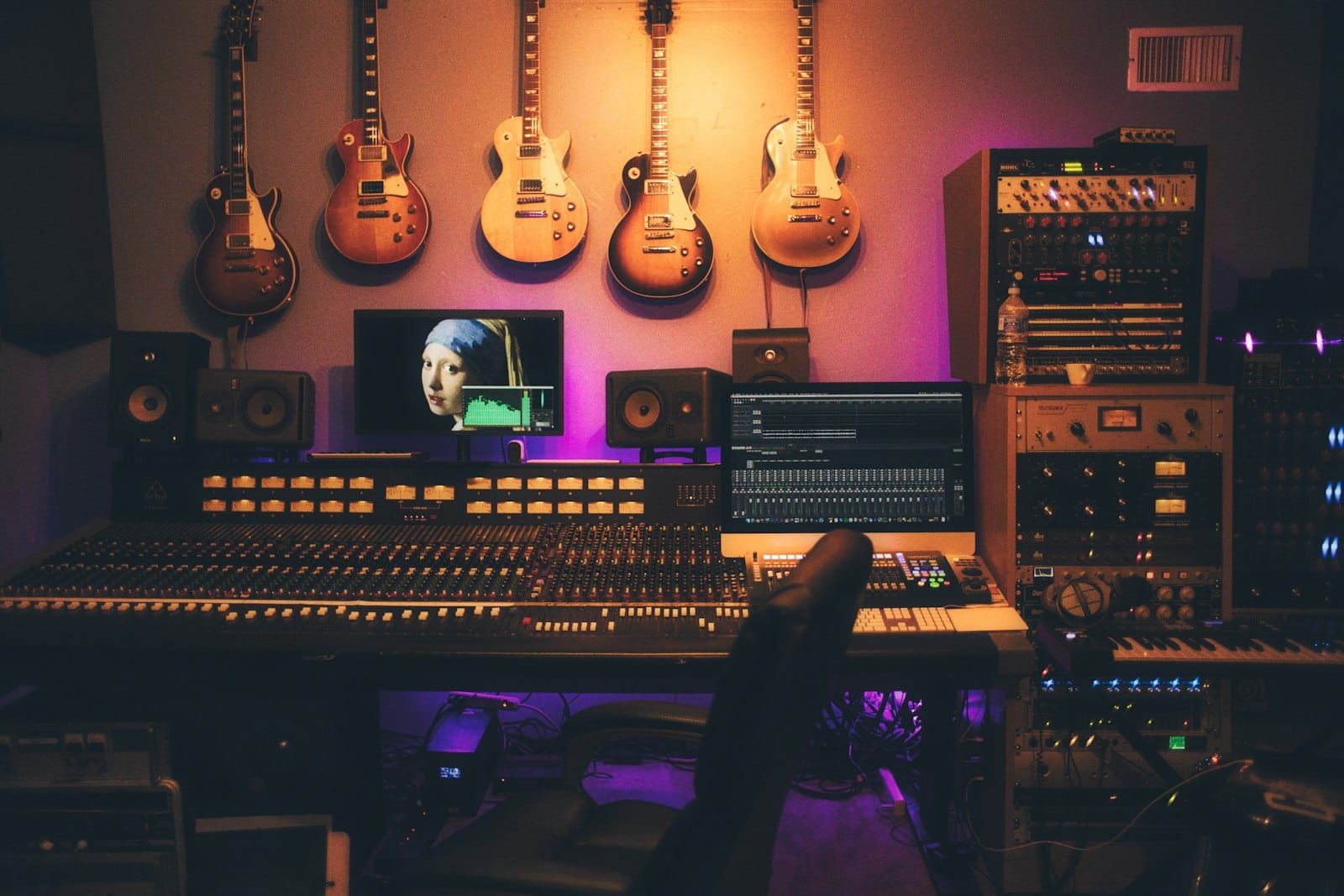
Record each harmony and each double as two, four, or more takes. For a wide chorus, four doubles of the main line (two destined for the left, two for the right) is a classic recipe. Keep your mic position and distance consistent so the tone matches, use a pop filter, and print clean, dry takes so you keep full control at the mix stage. If you can, use a slightly different microphone for backing vocals than for the lead — the tonal difference helps the parts separate naturally later. In our studio we track leads on a Neumann U87 and often move backing layers to a different capsule for exactly this reason. Professional vocal recording is where these details are dialled in.
Step 4: Stack, double and add ad-libs
With your core harmonies recorded, start building the stack. Layer the doubled lead first, then add the upper and lower harmonies, then their doubles. Between phrases, record ad-libs — echoes of the last word, soft “oohs” and “aahs”, runs, or answering lines. These fill the gaps and give the section motion. Group each part (all the “third above” takes together, all the doubles together) so you can control them as one fader later.
Less is often more. Rather than 30 chaotic layers, aim for a handful of well-sung, purposeful parts. A tight stack of eight excellent takes will always beat twenty sloppy ones.
Step 5: Pan and place your layers
Panning is where a flat stack becomes a wide, immersive vocal. Keep the lead vocal in the centre so it stays the focal point. Then spread the backing parts outward: pan one double hard left and one hard right; place the upper harmony and its double on opposite sides; do the same with the lower harmony. Ad-libs can be panned wherever they add interest, often slightly off-centre. This left-right spread is what makes a chorus suddenly feel three-dimensional while the lead stays locked in the middle.
To keep the width sounding natural rather than robotic, allow small timing offsets between layers (roughly 5–15 milliseconds) instead of quantising every take to a perfect grid. Those tiny human differences are the secret to width.
Step 6: Mix backing vocals behind the lead
The goal at mixdown is simple: backing vocals should be felt more than heard. Set their overall level so they support the lead without crowding it — a reliable test is that if you can sing along to the backing parts more easily than the lead, they are too loud. Use EQ to carve a little space so the BVs do not clash with the lead’s core frequencies, add gentle compression to glue the stack together, and use reverb and delay to push the layers slightly further back than the lead. Bus all your backing vocals to a single group so you can automate and process them as one cohesive unit.
Mixing a big vocal stack is genuinely an art — our guide on how to mix vocals goes deeper into EQ, compression and effects. When you want a truly polished result, professional mixing and mastering makes the difference between “home demo” and “release-ready”.
Common mistakes to avoid
The most frequent errors are easy to fix once you know them. Copying instead of re-singing gives you volume, not width. Backing vocals too loud pulls focus from the lead and flattens the arrangement. Harmonies slightly out of tune stack up into a distracting mess — get each one right before adding the next. Over-quantising removes the human timing that makes layers sound wide. And too many layers creates mud; a few great parts beat a pile of average ones every time. Finally, do not leave everything to the mix — a well-arranged, well-sung stack is 90% of the result before a single plug-in is added.
DIY vs studio: options and Dubai prices
You can absolutely start layering backing vocals at home, but a professional room, microphones and an engineer make a dramatic difference in tone and width. Here is how the main options compare in Dubai.
| Option | Best for | What you get | Typical Dubai price (AED) |
|---|---|---|---|
| DIY at home | Demos, learning | Your own mic and DAW; full control, limited room and gear | Cost of your setup |
| Studio vocal session | One song, clean layers | Pro mic, treated room, engineer tracking your leads and BVs | 500–900 per session |
| Recording + comping & editing | Release-ready vocals | Multiple takes, comping, tuning and timing of the full stack | 900–1,800 |
| Producer-led full production | Finished, radio-ready track | Arrangement, recording, layering, mixing and mastering end to end | 5,000–15,000 |
Prices vary with the number of layers, editing depth and turnaround. If you are unsure which level you need, a single vocal recording session is the easiest way to hear the difference a proper room makes, and you can scale up to full music production from there.
Frequently asked questions
How many backing vocal layers do I need?
For a full pop or R&B chorus, a doubled lead plus one harmony above, one below, and each of those doubled — roughly six to eight takes — is plenty. Quality and tuning matter far more than sheer quantity.
Can I record backing vocals with just one singer?
Yes. Almost all modern backing vocals are built by one singer layering many separate takes. The natural variation between real takes creates the “group” sound without needing a choir.
Should backing vocals use the same microphone as the lead?
Using a slightly different microphone for backing vocals can help them separate from the lead in the mix, since each mic has its own tonal character. If you only have one mic, that is fine too — just keep your position consistent.
Why do my layered vocals sound thin instead of wide?
The usual cause is copying one take instead of re-singing each layer, or panning everything to the centre. Record genuinely separate takes and pan doubles left and right to open up the width.
How loud should backing vocals be in the mix?
They should support, not compete. A good rule: if you can sing along to the backing parts more easily than the lead, they are too loud. Push them slightly back with level, EQ and reverb.
How much does it cost to record backing vocals in Dubai?
A single studio vocal session in Dubai typically runs 500–900 AED, recording with comping and editing around 900–1,800 AED, and a full producer-led production from 5,000–15,000 AED depending on scope.
About the author
George Yukhanov is a multi-platinum, award-winning songwriter, composer and music producer with over 20 years of experience, ranked among the top 5% of producers worldwide. He is the rare multi-platinum producer who works openly with newcomers, and he leads G Studio on Palm Jumeirah, Dubai — a premium recording studio equipped with a Neumann U87 and Tube-Tech gear, where artists at every level record, produce and develop their voice.
External resource: for another perspective on building vocal stacks, see this vocal layering guide from Native Instruments.