

Mixing vocals is the process of shaping a recorded vocal so it sits clearly and powerfully inside a song. In practice it means balancing the level, cleaning the tone with EQ, controlling the dynamics with compression, taming harsh “s” sounds, and adding space with reverb and delay. Done well, the voice sounds close, consistent and professional without ever fighting the music. This step-by-step guide walks through the exact vocal mixing chain we use at G Studio in Dubai — in the right order — so a beginner can get a clean, radio-ready vocal at home, and know when a track is worth handing to a pro.
Table of contents
- What “mixing vocals” actually means
- Before you mix: prep your vocal
- The vocal mixing chain, step by step
- Ways to get your vocals mixed (with Dubai prices)
- Common vocal mixing mistakes to avoid
- When to hand it to a professional
- Frequently asked questions
What “mixing vocals” actually means
Recording captures the performance; mixing makes it translate. A raw vocal — even a great take through a great microphone — is usually too dynamic, a little dull or boomy, and dry. Mixing is the set of decisions that turn that raw file into a finished sound: consistent in volume, clear in tone, and placed in a believable space around the listener. The goal is not to make the voice louder for the sake of it, but to make every word intelligible and every emotion audible while the vocal still blends with the music.
Good mixing starts with a good vocal recording. No plugin fully rescues a take recorded in a boomy room with the wrong mic distance, which is why the recording and mixing stages are best thought of as one craft.
Before you mix: prep your vocal
Three quick jobs make everything downstream easier:
Comp the best take
Combine (or “comp”) your strongest lines from several takes into one continuous performance. A confident, in-tune comp is the single biggest factor in a professional vocal — more than any plugin.
Clean and tune
Remove clicks, lip smacks and long silences, then correct any pitch issues gently. Subtle tuning keeps the voice human; heavy tuning is a stylistic effect, not a fix for a shaky take.
Gain stage
Set the vocal so peaks land around -12 to -6 dB before you add any processing. This leaves headroom for compression and effects and keeps your plugins operating in their sweet spot.
The vocal mixing chain, step by step
Order matters. Each stage sets up the next. This is a reliable starting chain for pop, R&B, hip-hop and singer-songwriter material.
1. Level & balance
Before touching a plugin, pull the vocal up against the instrumental so you can hear the words clearly. In most modern genres the lead vocal is the loudest melodic element. Get this rough balance right first; everything else is refinement.
2. Subtractive EQ
Start by removing problems. High-pass (cut lows) below roughly 80–100 Hz to remove rumble. If the voice sounds boxy or muddy, cut a little around 200–400 Hz. Small cuts, wide bandwidth. Clean first, then decide if you need to add anything.
3. Compression
Compression evens out the difference between loud and soft words so the vocal stays present throughout the song. A good starting point is a 3:1 or 4:1 ratio, medium attack and medium-fast release, aiming for roughly 3–6 dB of gain reduction on the loudest phrases. Many engineers use two lighter compressors in series rather than one heavy one for a more natural result.
4. De-essing
Bright vocals and condenser mics like the Neumann U87 can produce harsh “s” and “t” sounds. A de-esser targets the sibilance region — typically 5–8 kHz — and turns it down only when it spikes, so the vocal stays crisp without hurting the ears.
5. Additive EQ & color
Now shape character. A gentle boost around 2–5 kHz adds presence and helps consonants cut through; a light shelf around 10–12 kHz adds “air” and sheen. Optional saturation or a channel-strip emulation adds warmth and helps the vocal feel finished. Boost sparingly and always in the context of the full mix.
6. Reverb & delay (space)
Dry vocals feel pasted on top of the track. A short plate or room reverb (0.8–1.5 s), high-passed around 300–500 Hz so it doesn’t muddy the low end, places the voice in a believable space. A tempo-synced eighth- or sixteenth-note delay adds movement and depth without washing out the words. Use effect sends, not inserts, so you can blend the wet signal to taste.
7. Automation & final balance
Finally, ride the fader. Automate the vocal level line by line so quiet phrases stay audible and loud ones don’t jump out. Automate reverb and delay throwbacks on key words for emphasis. This hands-on pass is what separates a static mix from a living, professional one.
Ways to get your vocals mixed (with Dubai prices)
You don’t have to do everything yourself. Here is how the common options compare, with typical price ranges in Dubai.
| Option | Best for | What you get | Typical Dubai price |
|---|---|---|---|
| Mix it yourself | Hobbyists & learners | Full control; a real time investment | Free – AED 500 (plugins/course) |
| Preset / template packs | Fast results in your DAW | One-click starting points to tweak | AED 100 – 400 |
| Online freelance mixing | Tight budgets, remote work | A remote engineer; email revisions | AED 300 – 1,200 / song |
| Professional studio mixing (Dubai) | Release-ready singles | Engineer, treated room, revisions | AED 800 – 2,500 / song |
| Full mix + master (Dubai) | Streaming / label release | Polished, loud, platform-ready master | AED 1,500 – 4,000 / song |
If you want the release-ready end of that table, our mixing and mastering in Dubai service handles the full chain, and music production covers everything from arrangement to final master.
Common vocal mixing mistakes to avoid
Beginners tend to repeat the same handful of errors:
- Over-compressing. Squashing the life out of a vocal makes it flat and lifeless. Aim for control, not crush.
- Boosting instead of cutting. Reach for subtractive EQ first; you will need far fewer boosts than you think.
- Too much reverb. Big reverb feels impressive in solo but buries the vocal in the mix. Less is almost always more.
- Ignoring sibilance. Un-tamed “s” sounds cause listener fatigue on earbuds and car speakers.
- Mixing too loud. High volume tricks your ears. Mix at a comfortable level and check on multiple speakers.
- Skipping references. A/B your vocal against a professional song in the same genre to stay honest about tone and level.
When to hand it to a professional
Home mixing can get you surprisingly far, but three things are hard to replicate at home: an acoustically treated room, accurate monitoring, and years of trained listening. For a hobby demo, your own mix is perfect. For a single you plan to release, pitch to labels, or run ads behind, a professional mix protects the investment you already made in writing and recording the song.
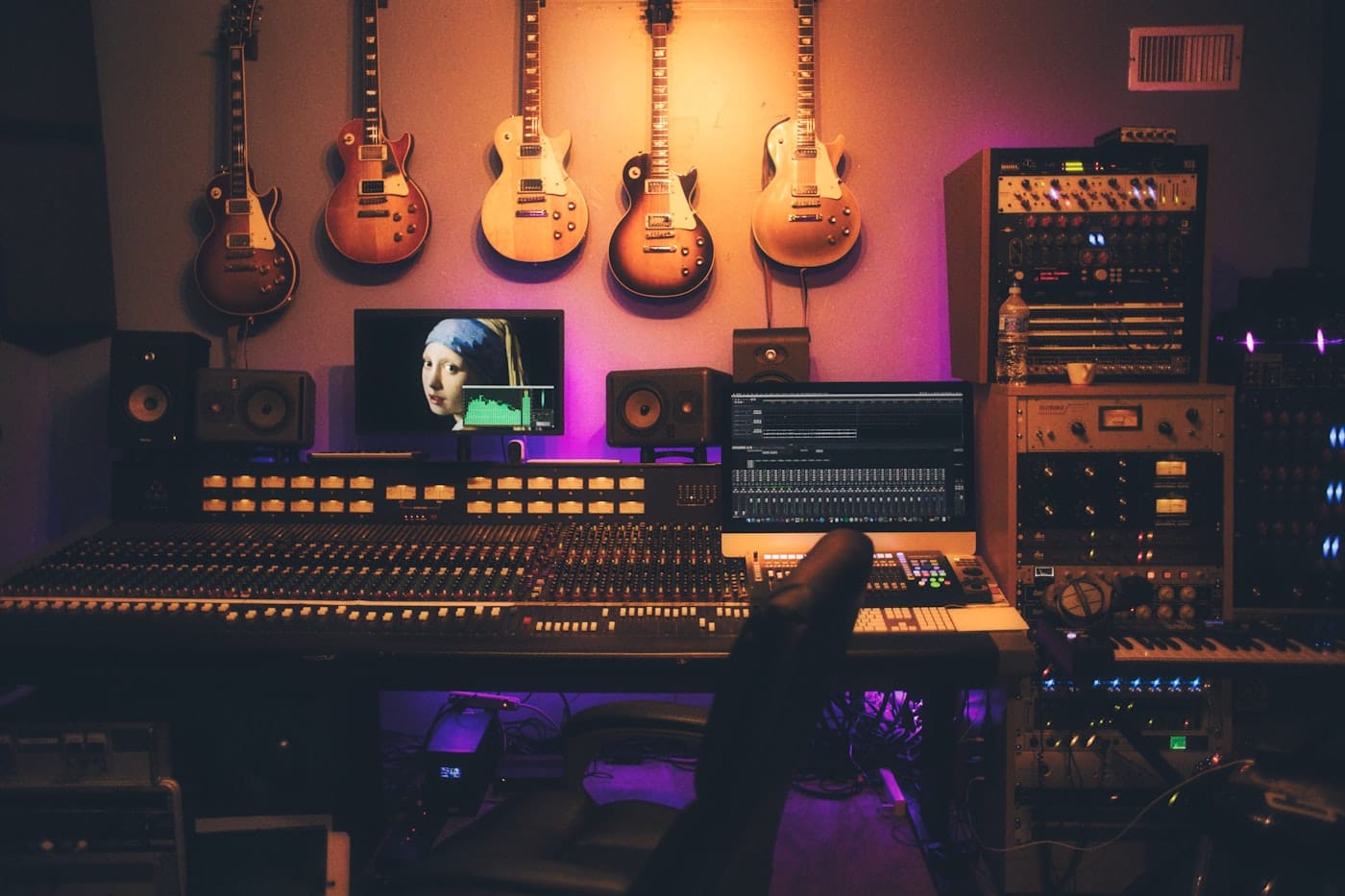
At G Studio on Palm Jumeirah we mix on treated monitoring through gear like the Neumann U87 and Tube-Tech MP2A, and we work openly with beginners — you don’t need to be an experienced artist to get a professional result. If you’re still capturing takes, our guide to how professional vocal recording changes your sound is a useful companion to this one. For deeper background on the discipline, see the overview of audio mixing.
Frequently asked questions
What order should I mix vocals in?
A reliable order is: set the level, subtractive EQ to clean, compression to control dynamics, de-essing to tame sibilance, additive EQ and optional saturation for tone, then reverb and delay for space, and finally volume automation.
Should I EQ or compress vocals first?
Usually clean the vocal with subtractive EQ first, then compress, then apply tone-shaping (additive) EQ after the compressor. Cleaning before compression stops the compressor from reacting to rumble and mud.
How loud should the vocal be in the mix?
In most modern genres the lead vocal is the loudest melodic element — you should hear every word effortlessly. Trust your ears and reference a professional track rather than chasing a fixed number.
Why do my vocals sound muddy or harsh?
Muddiness usually lives around 200–400 Hz — try a small cut there. Harshness and piercing “s” sounds live around 2–8 kHz — use gentle EQ and a de-esser to control them.
Can I mix vocals at home and get professional results?
Up to a point, yes — especially for demos. The limits are your room acoustics, your monitoring, and your experience. For commercial releases, a treated studio and a trained engineer make an audible difference.
How much does it cost to mix vocals in Dubai?
Professional per-song vocal mixing in Dubai typically runs AED 800–2,500, while a full mix and master usually falls between AED 1,500 and 4,000 depending on the track and number of revisions.
About the author
George Yukhanov is a multi-platinum, award-winning songwriter, composer and music producer, ranked in the top 5% of producers worldwide. He is one of the rare multi-platinum producers who works openly with newcomers, developing new artists at G Studio, his studio on Palm Jumeirah, Dubai, equipped with a Neumann U87 and Tube-Tech MP2A. If you’d like your song mixed, recorded or produced, you can book a session at G Studio.