

Stage fright when singing is normal, and it is beatable. Almost every performer feels it, from first-time students to touring professionals, because the body treats a performance the same way it treats any high-stakes moment: a rush of adrenaline, a faster heartbeat, shallow breathing. The trick is not to make the nerves disappear, but to channel that energy into your voice. The fastest way to do that is to over-prepare the song so your body runs on muscle memory, steady your breath with a simple pre-performance routine, and shift your focus away from the audience and onto one person you are singing to. This guide walks through each step, the way I coach singers in the studio.
Table of contents
- Why stage fright happens when you sing
- Step 1: Over-prepare the song
- Step 2: Steady your breathing
- Step 3: Shift your focus off the audience
- Step 4: Warm up and arrive early
- Nervous symptoms and quick fixes
- A 5-minute pre-performance routine
- Common mistakes that make nerves worse
- Stage fright in the recording studio
- FAQ
Why stage fright happens when you sing
Stage fright is your nervous system doing its job. When you feel watched or judged, your body releases adrenaline and prepares for action. Your heart beats faster to move oxygen, your breathing gets shallow, and blood moves away from fine motor control. For a singer this is a problem, because singing depends on exactly the things adrenaline disturbs: steady breath, relaxed throat muscles, and fine pitch control. That is why a shaky voice, a dry mouth, or a tight high note shows up precisely when you want to sound your best.
The good news is that the same arousal that causes trembling also sharpens your senses and gives your performance energy. Experienced singers do not have less adrenaline than beginners. They have simply learned to read it as excitement rather than threat, and they have built enough technical safety that their voice holds even when their pulse is high. You can learn both. For a wider view of the phenomenon across performers and public speakers, the overview on stage fright is a useful starting point.
Step 1: Over-prepare the song
The single biggest source of nerves is uncertainty. If part of you is not sure you will hit the bridge or remember the second verse, your brain keeps a background alarm running the whole time. The cure is to know the song so well that you could sing it tired, distracted, or half asleep. That level of preparation moves the performance from conscious effort into muscle memory, and muscle memory does not get stage fright.
Practise the hardest passages on their own, slowly, until they are boring. Sing the full song from memory without the backing track, so you are not leaning on cues that might vanish on the night. Then rehearse in conditions that are a little uncomfortable: standing up, in front of a mirror, in front of one friend, into a phone camera. Each small dose of pressure trains your body to perform the song under load. By the time you reach the real stage, it is just one more rep.
Step 2: Steady your breathing
Nervous breathing is fast and high in the chest, which is the opposite of what good singing needs. The quickest way to calm your whole system is to slow your exhale. Breathe in low, into your belly, for a count of four, then let the air out slowly for a count of six or eight. A long, controlled exhale signals your nervous system that you are safe, and your heart rate starts to drop within a few breaths.
This is also pure vocal technique. Singing from the diaphragm with a supported, unhurried breath gives you steadier pitch and longer phrases, so the same habit that calms your nerves also makes you sound better. If you want to build that support properly, work through our guide on how to sing from your diaphragm and make slow belly breathing part of every warm-up, not just the ones before a show.
Step 3: Shift your focus off the audience
Stage fright feeds on self-consciousness. The moment you start watching yourself through the audience’s eyes, wondering whether that note was flat or whether you look nervous, you leave the song. The fix is to give your attention a single, external job. Pick one idea: the story you are telling, the person you are singing to, the exact feeling in the chorus. Sing to that, not to the room.
A practical version I use with students is to imagine one real listener, a specific friend, and sing the whole song to that single person. It narrows a terrifying crowd into one warm face and pulls your delivery into something honest. This is the same skill that makes a studio vocal connect with strangers, which is why I treat performance nerves and emotional delivery as two sides of one thing. Our article on how to sing with emotion goes deeper into singing to one person.
Step 4: Warm up and arrive early
A cold voice feels unreliable, and an unreliable voice makes you nervous. Give yourself a proper vocal warm-up of ten to fifteen minutes before you perform, starting with gentle humming and lip trills and building up to the range of your song. A warm, responsive voice removes one big source of worry, because you already know it is working.
Just as important is time. Rushing in at the last second stacks logistical panic on top of performance nerves. Arrive early, learn the space, check where you will stand, and do your breathing routine somewhere quiet. If the performance is a studio session, the same logic applies: come early, settle in, and let the room stop feeling strange before the first take. Our guide on how to prepare for your first vocal recording session covers that arrival routine in detail.
Nervous symptoms and quick fixes
Most stage-fright symptoms have a simple physical cause and a fast, practical fix. Here are the ones singers meet most often.
| Symptom | Why it happens | In-the-moment fix |
|---|---|---|
| Shaky, wobbly voice | Shallow, tense breathing and tight support muscles | One slow belly breath with a long exhale before you start the phrase |
| Dry mouth | Adrenaline reduces saliva | Sip room-temperature water; keep a bottle on stage; avoid sugary drinks |
| Racing heart | Adrenaline rush from feeling watched | Extend your exhale to twice the length of your inhale for 4-5 breaths |
| Tight, strained high notes | Throat and jaw tension from stress | Drop the jaw, relax the shoulders, and think of the note going out, not up |
| Blank mind, forgot the words | Attention hijacked by self-monitoring | Return to the story and the next single line, not the whole song |
A 5-minute pre-performance routine
You do not need a long ritual. A short, repeatable routine done the same way every time becomes an anchor your body trusts.
- Minute 1 – Breathe. Four slow belly breaths, inhale for four, exhale for eight. Let the shoulders drop.
- Minute 2 – Hum and trill. Gentle humming and lip trills through an easy part of your range to wake the voice without strain.
- Minute 3 – Touch the hard spot. Sing the one phrase you worry about, once, calmly, to remind your body it already knows it.
- Minute 4 – Set your focus. Decide who you are singing to and what the song is about. Say it to yourself in one sentence.
- Minute 5 – Reframe. Tell yourself the truth: this feeling is excitement, and the audience wants you to do well.
Common mistakes that make nerves worse
A few habits quietly amplify stage fright. The first is under-rehearsing and hoping adrenaline will carry you; it will not, it will expose the gaps. The second is trying to eliminate nerves entirely, which only adds a layer of panic about being panicked. The third is caffeine and sugar right before you sing, which spike the very symptoms you are trying to calm. The fourth is scanning the audience for reactions mid-song, which pulls you straight out of the performance. And the last is apologising, out loud or in your face, for a small mistake that most listeners never even noticed. Keep going. The audience follows your lead; if you stay in the song, so do they.
Stage fright in the recording studio
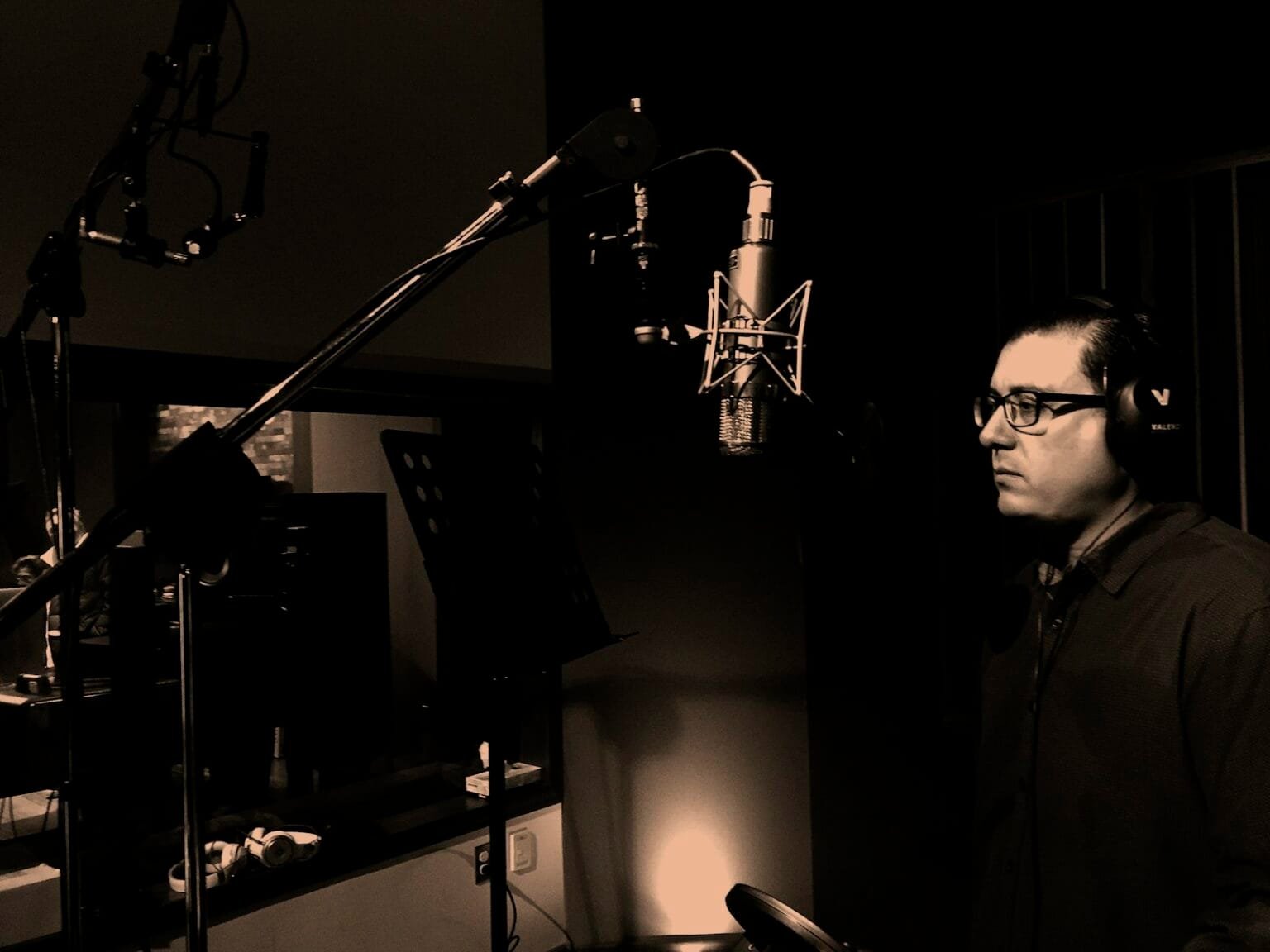
Many singers are surprised that the studio can feel just as nerve-racking as a stage, sometimes more. There is no crowd, but there is a microphone that hears everything, and a sense that the take is permanent. The antidote is the same preparation and breathing, plus a studio that is built to make you comfortable. A calm engineer, a good headphone mix, and permission to do as many takes as you need take the pressure off completely, because nothing is final until you are happy with it.

This is a big part of how I work. I am a multi-platinum producer, but the first job in any session is to make the singer feel safe enough to actually perform. We take the time to warm up, we build a headphone mix you love, and we comp the best moments from several relaxed takes rather than chasing one perfect pass. If you want to experience a session like that, this is what professional vocal recording at G Studio is designed around, and it carries through to the music production and mixing and mastering that follow.
Frequently asked questions
Is stage fright normal when singing?
Completely. The large majority of performers feel some degree of nerves, including professionals who have sung for decades. It is a sign that the performance matters to you. The goal is not to remove it but to manage it so it does not interfere with your voice.
Why does my voice shake when I am nervous?
A shaky voice comes from shallow, tense breathing and tight support muscles under adrenaline. When your breath is fast and high in the chest, you cannot give a note steady airflow, so it wavers. Slowing the breath and supporting from the diaphragm stops the shake.
How do I stop my voice from shaking on the day?
Take one slow belly breath with a long, controlled exhale right before you start, and focus on supporting the phrase rather than on the audience. Make sure you are warmed up, and keep water nearby. The shake fades as your breathing settles.
Can you get rid of stage fright completely?
For most people, no, and you would not want to. The aim is to turn the nervous energy into performance energy. With preparation and experience the nerves become smaller, more familiar, and easier to use rather than fight.
How long before a performance should I warm up?
Give yourself ten to fifteen minutes of gentle warm-up shortly before you sing, finishing close enough to showtime that your voice stays warm. Arrive early so the warm-up is calm and unhurried rather than squeezed in at the last moment.
Does recording in a studio cause stage fright too?
Yes, the microphone and the sense of permanence can create their own kind of nerves. The same breathing and preparation help, and a supportive studio that lets you do multiple takes removes most of the pressure, because nothing is final until you are satisfied with it.
About the author
This guide was written by George Yukhanov, a multi-platinum, award-winning author, composer and producer with more than 20 years in music and a catalogue streamed tens of millions of times. Ranked among the top 5% of producers worldwide, George is the rare multi-platinum producer who works openly with newcomers, and he coaches singers through nerves and first takes every week at G Studio on Palm Jumeirah, Dubai. If you are ready to record, you can start with a vocal recording session.