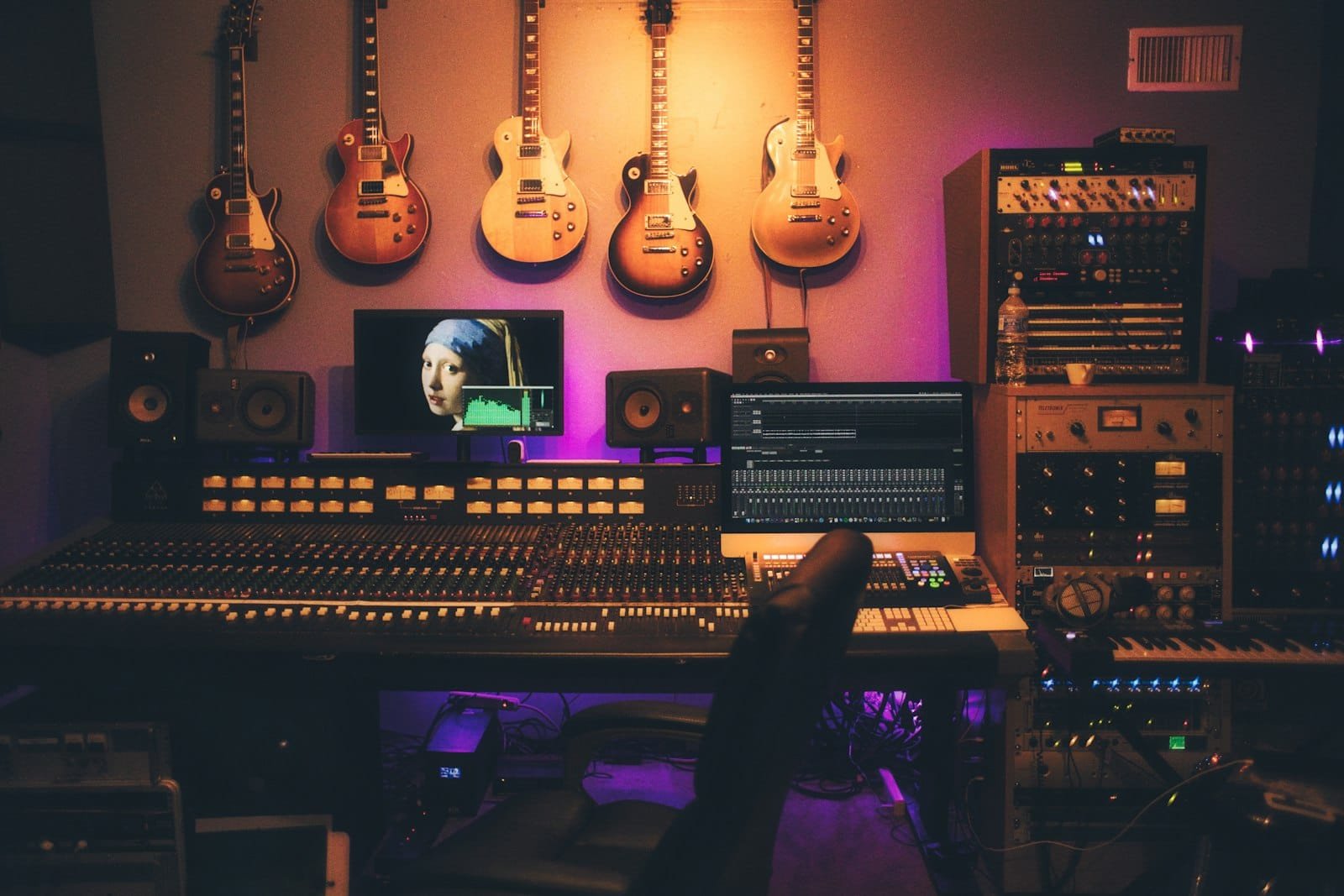

To mix a song, you balance and shape every recorded track so they work as one finished piece of music. The core workflow is the same in every professional studio: set your gain levels, balance the volumes, pan instruments across the stereo field, carve space with EQ, control dynamics with compression, add depth with reverb and delay, ride the details with automation, and check everything against a reference track. A good mix makes the lead vocal sit clearly on top, keeps the low end tight, and lets the song feel loud and alive without sounding harsh. Below is the exact eight-step process I use in my Dubai studio, plus a comparison of your real options and answers to the questions I hear most often.
Table of contents
- What does it mean to mix a song?
- How to mix a song in 8 steps
- DIY vs hybrid vs pro studio mixing
- Common mixing mistakes to avoid
- Mixing vs mastering: what is the difference?
- Frequently asked questions
What does it mean to mix a song?
Mixing is the stage that comes after recording and before mastering. You start with a session full of separate tracks: lead vocal, backing vocals, drums, bass, guitars, keys, and any extra layers. On their own, those tracks compete for the same space and the song sounds cluttered and flat. Mixing is the craft of blending them into one balanced, emotional, release-ready track where every element has its place and the listener’s ear is guided to what matters most.
A strong mix does three things at once. It sets the right balance so nothing is buried and nothing is too loud. It creates clarity so each instrument can be heard without masking the others. And it adds depth and emotion, using space and movement so the song breathes instead of sitting as a wall of sound. I have spent more than twenty years mixing records, and the difference between an amateur mix and a professional one is almost always restraint and reference, not expensive plugins.
How to mix a song in 8 steps
Follow these steps in order. The sequence matters: get the foundation right before you reach for effects, or you will spend hours fixing problems you created yourself.
1. Organize the session and set gain staging
Before you touch a fader, label every track, colour-code groups (drums, vocals, music), and route them to buses. Then set your gain staging so each track peaks around -18 to -12 dBFS, leaving healthy headroom on the master. Clean, consistent levels going in make every other step easier and keep your plugins working in their sweet spot.
2. Balance the levels (the static mix)
With all effects off, pull every fader down and bring tracks up one at a time, starting with the most important element of the song. For most modern songs that is the lead vocal, so build the mix around it. A huge part of the work is done here: if the song already sounds good with faders alone, you are on the right track. This static balance is the backbone of the whole mix.
3. Pan instruments across the stereo field
Panning gives each element its own position left to right so they stop fighting for the centre. Keep the kick, bass, lead vocal, and snare in the middle, then spread guitars, keys, backing vocals, and overheads outward. A wide, well-panned mix feels three-dimensional and lets the listener hear every part clearly.
4. Carve space with EQ
Equalisation is how you make room for each instrument in the frequency spectrum. Cut the frequencies a track does not need before you boost the ones it does. High-pass instruments that have no useful low end, tame boxy mids, and gently lift presence where an element needs to cut through. The goal is not to make each track sound great in solo, but to make them all fit together.
5. Control dynamics with compression
Compression evens out the loud and quiet moments so a performance stays consistent and present. Use it most on vocals, bass, and drums. Start with a moderate ratio, set the threshold so you catch only the loudest peaks, and adjust attack and release to keep the energy of the performance. Done well, compression is felt more than heard.
6. Add depth with reverb and delay
Reverb and delay place your tracks in a believable space and glue the mix together. A short room reverb adds cohesion, a longer hall or plate adds drama, and a timed delay adds width and interest without washing things out. Use sends and buses rather than inserting a separate reverb on every track, so the whole mix sits in a shared, controllable space.
7. Ride the details with automation
Automation is what separates a static mix from a living one. Ride the vocal so every word is heard, lift the chorus so it lands harder than the verse, pull back a busy section, and push a key fill. Small volume and effect moves across the timeline keep the energy building and the listener engaged from start to finish.
8. Reference, rest, and finalize
Compare your mix against two or three professionally released songs in a similar style, matched for loudness. Check the balance on different systems: studio monitors, headphones, and a phone speaker. Take breaks so your ears stay honest. When the lead element is clear, the low end is tight, and the song translates everywhere, bounce your final stereo mix and hand it off for mixing and mastering.
DIY vs hybrid vs pro studio mixing
You have three realistic paths to a finished mix. The right one depends on your budget, your timeline, and how important the release is. Here is an honest comparison, with Dubai pricing.
| Option | Best for | Typical cost (Dubai) | Quality ceiling |
|---|---|---|---|
| DIY in your DAW | Learning, demos, hobby releases | Your time only | Depends entirely on your skill and room |
| Hybrid (you record, studio mixes) | Home-recorded songs that need a pro finish | From AED 450/hour with an engineer | High, if your recordings are clean |
| Full pro studio | Serious releases, commercial singles | AED 600/hour with George; turnkey songs from USD 5,000 | Highest, start to finish control |
If you are starting out, learning to mix your own songs is one of the best investments you can make. But when a song really matters, bringing it to a professional ear is what turns a good idea into a release that competes. In my studio on Palm Jumeirah we offer both: you can book professional mixing and mastering on a song you recorded yourself, or record and produce the whole thing with us through full music production.
Common mixing mistakes to avoid
These are the errors I see most often from newer producers, and each one is easy to fix once you know to watch for it:
- Mixing too loud. High volume tricks your ears into thinking everything sounds good. Mix at a conversational level and your decisions will translate better.
- Too much low end. Buildup in the bass frequencies makes a mix muddy. High-pass tracks that do not need lows and keep the sub region clean.
- Boosting everything with EQ. If every track is boosted, nothing stands out. Cut first, boost second, and work in context.
- Over-compressing. Squashing every track kills the dynamics that make a performance exciting. Use compression with intent.
- Drowning the mix in reverb. Too much reverb pushes everything to the back and blurs the detail. Less is almost always more.
- No reference track. Mixing in a vacuum is how you lose perspective. Always compare to a professional release in your genre.
Mixing vs mastering: what is the difference?
These two stages are often confused, but they are different jobs. Mixing works with all the individual tracks of one song, balancing and shaping them into a single stereo file. Mastering takes that finished stereo mix and polishes it for release: final loudness, tonal balance, and consistency so the song sits well next to other commercial tracks and sounds right on every platform and device.
In short, mixing makes the song sound good on its own, and mastering makes it sound good everywhere. If you want to go deeper on the final stage, read our guide on how to master a song, and if vocals are your focus, see how to mix vocals. For the technical background, the audio mixing overview on Wikipedia is a solid reference.
Frequently asked questions
How long does it take to mix a song?
A professional engineer usually mixes a song in four to eight hours of focused work, plus revisions. A beginner mixing their own song may spend much longer because the skill is still developing. Clean recordings always speed up the process.
Can I mix a song myself at home?
Yes. With a decent pair of headphones or monitors, a DAW, and the eight-step process above, you can get a solid mix at home. The biggest limitations are usually your room acoustics and your experience, both of which improve over time.
What is the most important part of a mix?
Balance. Getting the relative volumes of every element right, with faders alone, before any effects, is the foundation of every great mix. If the balance is wrong, no plugin will save it.
Do I mix before or after mastering?
Always mix first. Mastering is the final step and works on the completed stereo mix. You cannot master a song properly until the mix is finished and balanced.
How much does professional mixing cost in Dubai?
At G Studio, professional mixing starts from AED 450 per hour with an engineer and AED 600 per hour working directly with George. Full turnkey song production, which includes recording, production, mixing, and mastering, starts from USD 5,000.
Why does my mix sound bad on other speakers?
This almost always comes down to room acoustics, over-reliance on one set of headphones, and no reference track. Check your mix on several systems, compare it to a commercial release, and the translation will improve.
Mix your next song with a multi-platinum producer
Mixing is where a song finally becomes itself, and it is a craft worth learning and worth investing in. This guide is written by George Yukhanov, a multi-platinum, award-winning author, composer, and producer with more than twenty years in music and over 500 million views of his songs. Ranked among the top 5% of producers worldwide, George is the rare multi-platinum producer who works openly with newcomers as well as established artists. At G Studio on Palm Jumeirah you can record, produce, and mix your song in one premium studio, or send us a home recording for a professional finish. Ready to hear your song at its best? Get in touch with G Studio and let’s bring it to life.