
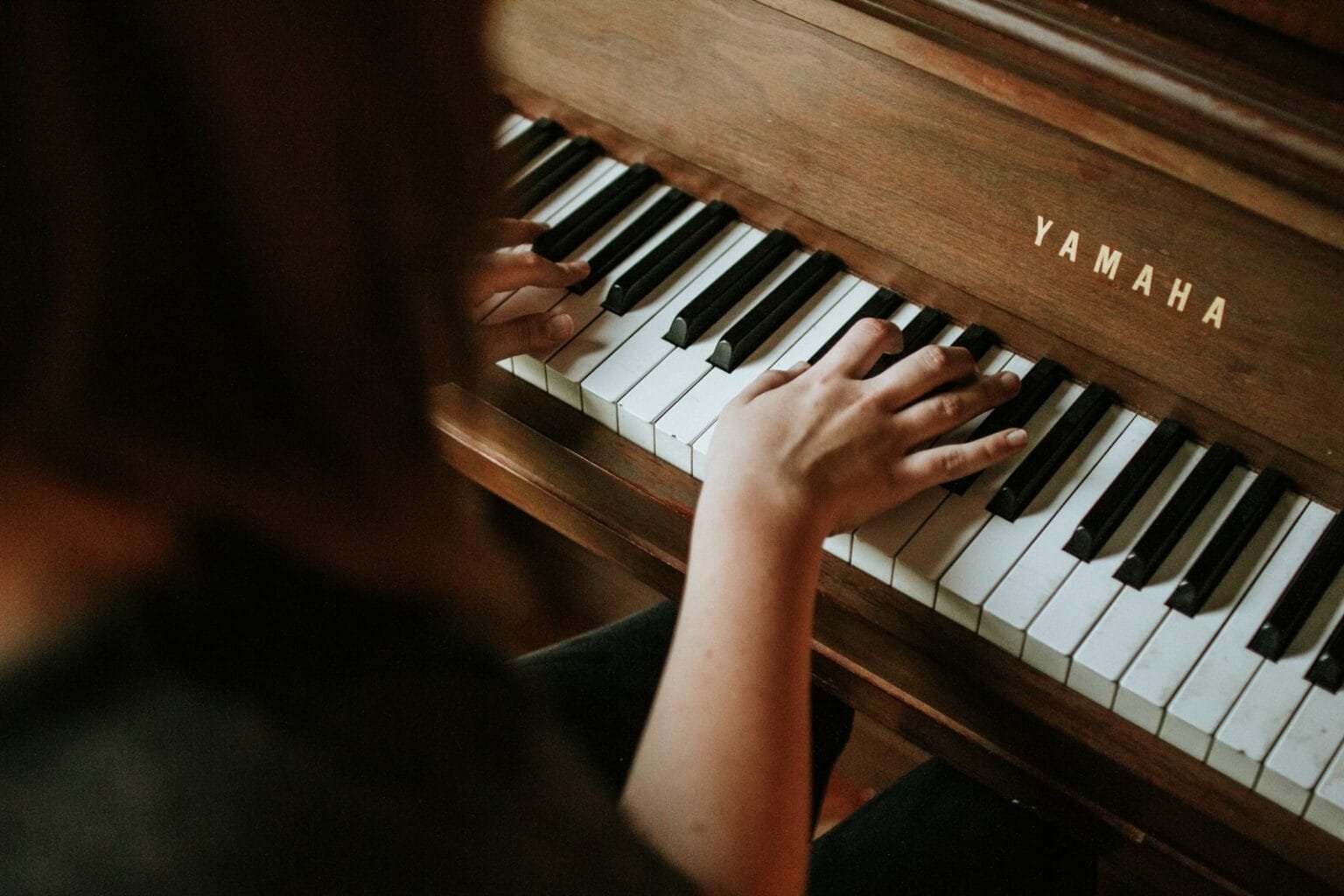
Writing a song on piano is one of the most natural ways to turn a feeling into music. You sit down, find a chord you love, and build everything else around it. The short answer: start with a simple chord progression, lock a steady tempo, decide on a basic song structure, hum a melody over the chords, then shape the words to fit. You do not need to read sheet music or play fast. You need four chords, a little patience, and a willingness to repeat ideas until they feel right. This guide walks you through the exact process I use with artists in my Dubai studio, from first chord to finished song.
In this guide
- Why the piano is the best instrument to write on
- What you need before you start
- How to write a song on piano, step by step
- Piano songwriting approaches compared
- Common mistakes beginners make at the piano
- Writing songs on piano with kids
- Turning your piano song into a finished track
- Frequently asked questions
Why the Piano Is the Best Instrument to Write On
The piano lays out every note you have in a straight line in front of you. Where a guitar hides the logic of music behind frets and shapes, a keyboard shows it plainly: left to right is low to high, and the pattern of black and white keys repeats in every octave. That visual clarity is why so many of the most famous songwriters, from Carole King to Elton John to Alicia Keys, write at the piano.
A piano also lets you hear the full picture of a song at once. With two hands you can play a bass note, a chord, and a melody at the same time, so you can test whether an idea actually works before you ever record it. You do not need a grand piano, either. A basic weighted keyboard, or even a free piano app, is enough to write a complete song. The instrument is a tool for thinking in sound, and the piano is the clearest window into how a song is built.
What You Need Before You Start
You need surprisingly little. A piano or keyboard with at least a few octaves, a quiet space, and a way to record rough ideas so you do not lose them. Your phone voice recorder is perfect for capturing a progression or a melody the moment it arrives.
In terms of skill, you need to be able to play a chord with your left or right hand and hold it. If you know three or four basic chords, you already have enough to write a song. Most hit songs live inside four chords. What matters far more than technique is your ear and your willingness to try an idea, discard it, and try again. Keep a notebook or a notes app open for lyric fragments and titles, because the best lines often arrive before the music is finished.
How to Write a Song on Piano, Step by Step
Here is the process from blank page to a song you can play start to finish. Work through it in order the first few times; later you will jump between steps freely.

1. Find a chord progression
Start with chords, because they set the emotional color of everything that follows. Play four chords in a loop and listen to how they make you feel. A reliable starting point is the I-V-vi-IV progression (in the key of C, that is C, G, A minor, F), which powers hundreds of pop songs. Play it slowly, around four beats per chord, and let it repeat. If it moves you, you have your foundation. If it feels flat, change one chord and listen again.
2. Set a tempo and a groove
Decide how fast the song breathes. A ballad might sit around 70 beats per minute, an upbeat pop song closer to 120. Play your progression at that tempo with a simple rhythm in the left hand, even just one bass note per chord. The groove is what turns a set of chords into music that wants to move. Keep it simple at this stage; complexity can come later.
3. Build the song structure
Most songs follow a map: verse, chorus, verse, chorus, bridge, chorus. Decide which chords belong to the verse and which to the chorus. A common trick is to use the same chords for both but change the rhythm, the melody, and the energy so the chorus lifts. The chorus is the emotional peak, so give it your strongest progression. If you want a deeper look at how sections fit together, see our guide on song structure.
4. Write the melody
Now sing or hum over your chords. Do not play the melody with your hands yet; let your voice find it, because the voice naturally lands on notes that feel singable. Record every attempt. A strong melody usually uses a small range of notes and repeats a short, memorable shape. Once you have a vocal melody you like, you can double it on the piano with your right hand to make it solid.
5. Add the lyrics
With a melody in place, the rhythm of the words is already half-decided. Sing nonsense syllables first to feel where the stresses fall, then replace them with real words that fit that rhythm. Start with the chorus, since it carries the main message, then write verses that build toward it. Keep the language simple and specific. One true, concrete image beats a page of abstract feelings.
6. Arrange and refine
Play the whole song top to bottom and notice where it drags or where it jumps too fast. Add a short intro, maybe four bars of the chord progression alone. Decide where the piano should play fuller chords and where it should pull back to let the voice breathe. This is also where you decide what the finished recording should sound like, and the arrangement you build on piano becomes the blueprint for the full production.

Piano Songwriting Approaches Compared
There is no single correct order. Different starting points suit different writers and different songs. Here is how the three main approaches compare.
| Approach | Best for | Strength | Watch out for |
|---|---|---|---|
| Chords first | Beginners and mood-driven songs | Sets emotion immediately; easy to build on | Melody can get stuck following the chords too closely |
| Melody first | Catchy, hook-driven pop | Produces memorable, singable tunes | Harder to find chords that support an existing melody |
| Lyrics first | Story songs and strong messages | Words stay natural and meaningful | Fitting words to music can feel forced if the rhythm is off |
Most experienced writers switch between these within a single session. Start with whichever one is flowing that day.
Common Mistakes Beginners Make at the Piano
The first is overplaying. Beginners often fill every beat with notes, leaving the voice no room. A song breathes when the piano leaves space. The second is chasing complicated chords before the song has a clear shape; a simple progression played with feeling beats a clever one played without it. The third is never finishing. Many writers have a phone full of eight-bar loops and no complete songs. Push a single idea all the way to an ending, even a rough one, because a finished imperfect song teaches you more than a hundred unfinished sketches. Finally, do not judge your melody while your hands are struggling with the chords. Record the part, listen back with free ears, and decide then.
Writing Songs on Piano With Kids
The piano is wonderful for children because they can make real music with a single finger. In our childrens programme we often start a young writer with just two chords and a question: what is this song about? A child who cannot yet read music can still invent a melody by humming and pressing keys until it matches. The goal at that age is not technique but the thrill of creating something that did not exist an hour ago. If your child shows interest, encourage them to write short, silly songs about their day. That playful instinct is exactly what professional songwriters spend years trying to protect.
Turning Your Piano Song Into a Finished Track
A song written at the piano is a complete idea, but a finished record is something more: the right sounds, a real vocal, and a professional mix that lets every part sit in its place. This is where a studio comes in. Once your chords, melody, and lyrics are solid, the next steps are a proper vocal recording session, full music production to build the arrangement around your piano, and finally mixing and mastering so it sounds ready for release.
I have spent more than twenty years helping artists take songs from a rough piano sketch to finished, chart-ready records, and one thing has stayed true: a strong song written honestly at the piano is the best possible foundation. The production can only amplify what is already there. If you have written something on piano and want to hear what it can become, that is exactly the kind of work we do every day. You can also read how I approach writing a song on guitar to see how the same ideas translate to another instrument.
Frequently Asked Questions
Can I write a song on piano if I cannot read sheet music?
Yes. Most professional songwriters write by ear, not by reading notation. If you can play and hold a few chords and hum a melody, you can write a complete song. Reading music is a useful skill but it is not required to create.
How many chords do I need to write a song on piano?
Three or four chords are enough for a complete, satisfying song. A huge number of hit songs use only four chords for the entire track. Start simple; you can always add richer chords later once the song works.
Should I write the melody or the lyrics first?
Either works. Writing the melody first tends to produce catchier, more singable songs, while writing lyrics first keeps the words natural and meaningful. Many writers write the chords first, then let melody and lyrics grow together.
What is a good first chord progression to try?
The I-V-vi-IV progression is the most reliable starting point. In the key of C that is C major, G major, A minor, and F major. Loop those four chords and you already have the backbone of a pop song.
How long does it take to write a song on piano?
A rough song can come together in an hour, while a polished one may take days of refining. Speed is not the goal. It is better to finish a simple song than to endlessly polish an unfinished one, so aim to reach an ending every time you sit down.
Do I need an expensive piano to write songs?
No. A basic weighted keyboard, a digital piano, or even a piano app on a tablet is enough to write a full song. The instrument matters far less than your ideas. When you are ready to record, that is when professional equipment and a treated room make a real difference.
For more background on how songs are built, see the overview of songwriting.
About the author. George Yukhanov is a multi-platinum, award-winning music producer, author and composer with more than twenty years in the industry and over 500 million views of his songs. Today he ranks among the top 5% of producers worldwide and is the rare multi-platinum producer who works openly with newcomers. At his G Studio on Palm Jumeirah in Dubai, he helps artists of every level turn ideas into finished, release-ready records, and teaches the next generation through his music school, including music programmes for kids.