

To record bass, plug your bass into an audio interface through a DI box (or your interface’s instrument/Hi-Z input), set the gain so the loudest notes peak around -10 dBFS with no clipping, and play tightly in time with the kick drum. You can record a clean DI signal, mic a bass amp, or capture both and blend them later. Fresh strings, correct intonation, even note lengths and steady right-hand technique matter far more than expensive gear. Below is the exact step-by-step process I use in my Dubai studio to get a bass track that sits solid in the low end and locks the whole song together.
Table of Contents
- What you need to record bass
- Step 1: Set up your bass and signal path
- Step 2: Set levels and dial in the tone
- Step 3: Play in the pocket with the drums
- Step 4: Record and comp your takes
- Step 5: Edit, EQ and mix the bass
- Common mistakes when recording bass
- Recording bass at G Studio in Dubai
- FAQ
What you need to record bass
Recording bass is refreshingly simple compared with many instruments, because a bass guitar gives you a strong, direct signal you can capture cleanly without a microphone. Here is the short list:
- A bass with fresh strings. Old strings sound dull and dead. A new set, correctly tuned and intonated, is the single biggest upgrade to your recorded tone.
- An audio interface with a Hi-Z (instrument) input, or a dedicated DI box feeding a line input. This converts the bass’s high-impedance signal so it records cleanly.
- A good instrument cable — short and shielded, to keep hum and noise out.
- Headphones and a DAW such as Logic, Ableton Live, Pro Tools or Cubase, with a click and a drum or reference track to play along to.
- Optional: a bass amp and a microphone if you want to capture amp character alongside the DI.
You do not need a world-class room to record bass, which is exactly why it is one of the best instruments to track at home. If you are still choosing between tracking yourself and booking time, our guide on music production in Dubai explains where a producer adds the most value.
Step 1: Set up your bass and signal path
Before you hit record, decide how the bass will reach your DAW. There are three classic approaches, and each has a place.
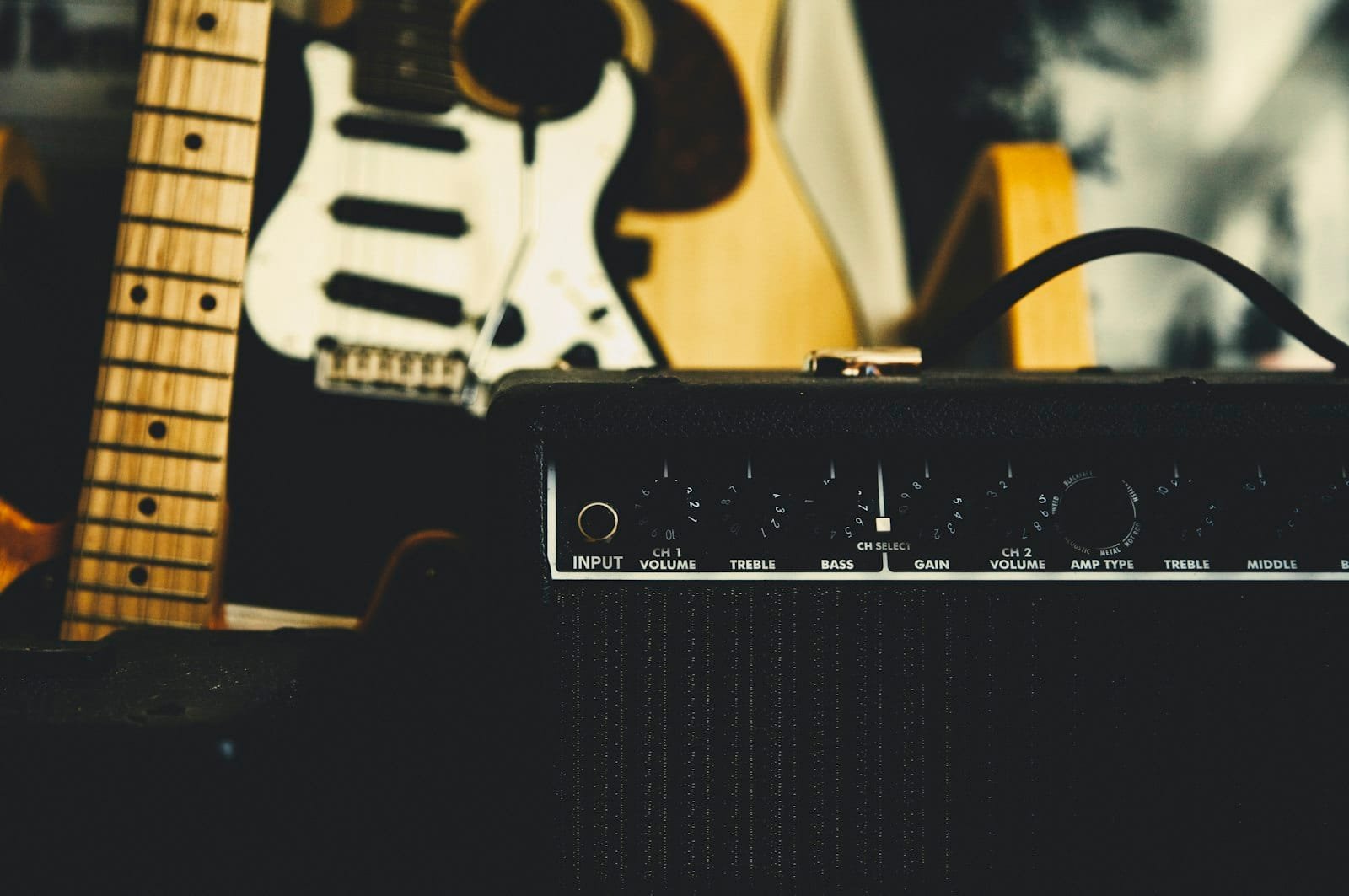
DI, amp or both?
A DI (direct injection) takes the bass signal straight into your interface — clean, tight and noise-free. Micing a bass amp adds the character and movement of a real speaker, but needs a quiet room and careful mic placement. Recording both at once gives you the most flexibility at mix time. For most home and project recordings, a clean DI is all you need.
| Method | Sound | Best for | Difficulty |
|---|---|---|---|
| DI (direct) | Clean, tight, full low end | Pop, R&B, home recording, modern production | Easy |
| Miced amp | Warm, coloured, “in the room” grit | Rock, indie, vintage tones | Harder (needs a good room) |
| DI + amp blend | Best of both — clean body plus character | Serious sessions, mixing flexibility | Moderate |
Whichever route you take, change to fresh strings and check the intonation first. If a note reads in tune open but sharp or flat at the 12th fret, the intonation needs adjusting — otherwise the bass will fight the song no matter how well you play.
Step 2: Set levels and dial in the tone
Bass has a lot of energy, so gain staging matters. Play the loudest notes you will perform — usually a hard open E or a slap — and set the interface gain so those peaks land around -10 to -6 dBFS. You want healthy level with clear headroom; digital clipping on bass is harsh and almost impossible to fix later.
Use the bass itself as your first EQ
Your tone starts in your hands and on the instrument. Rolling the tone knob back slightly smooths harsh highs; favouring the neck pickup gives a rounder, warmer sound, while the bridge pickup is brighter and more aggressive. Where you pluck changes everything too: near the neck is fat and soft, near the bridge is tight and punchy. Decide the character before you record rather than trying to invent it in the mix.
Record dry when in doubt
If you track a clean DI, you can always add amp simulation, compression and EQ afterwards. A dry, well-played DI is a gift to whoever mixes the song — it keeps every option open.
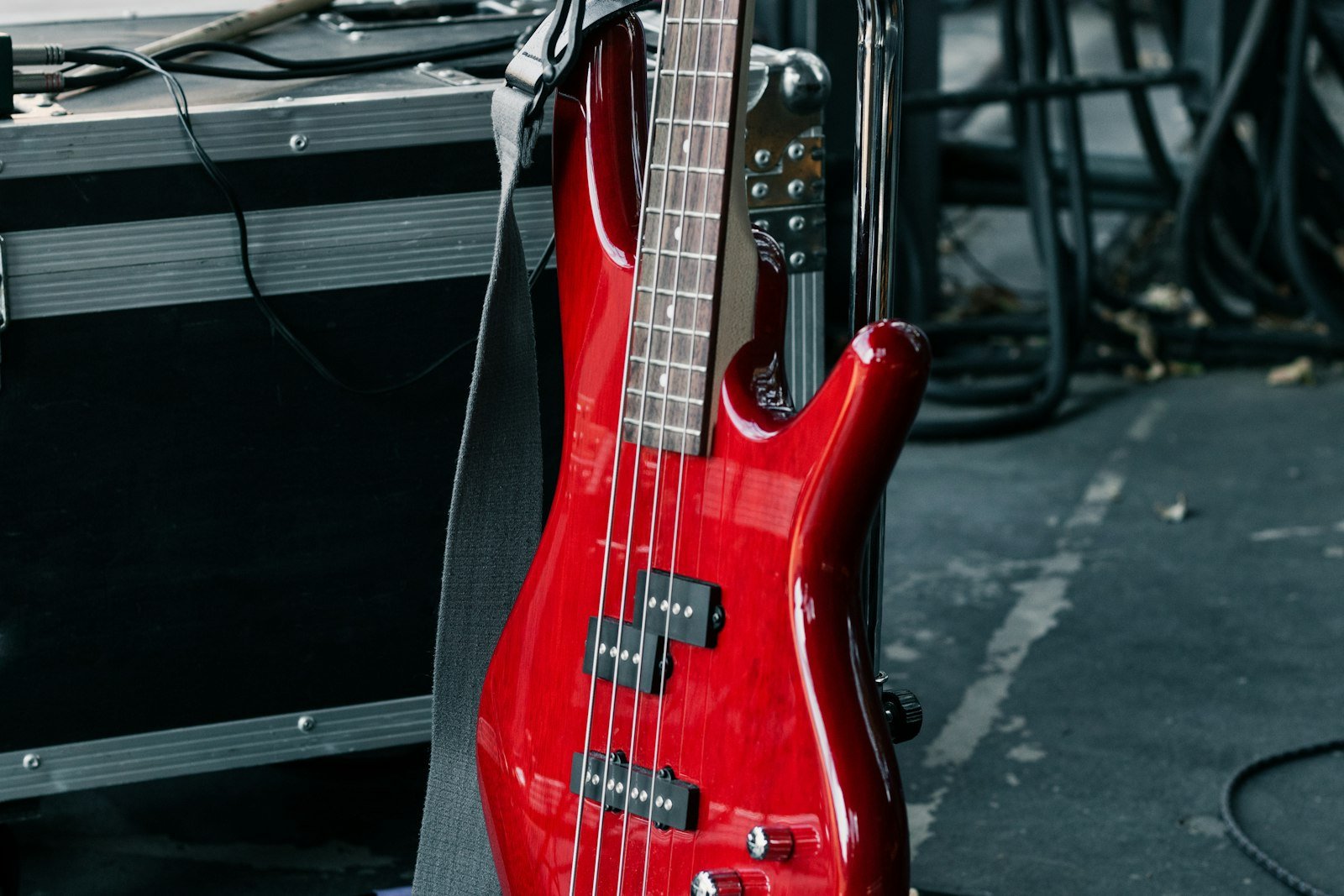
Step 3: Play in the pocket with the drums
Bass is not a solo instrument in most songs; it is the bridge between the drums and the harmony. A recorded bass line lives or dies on timing. Always play to a click and, ideally, to the drums — especially the kick.
Lock to the kick
Listen to how your notes line up with the kick drum. In most grooves the bass and kick should feel like one instrument. If you are recording your own songs, it helps to track drums (or program a solid beat) first; our guide on how to record drums covers getting that foundation right.
Mind your note lengths and muting
Great bass playing is as much about when a note stops as when it starts. Let notes ring where the song wants weight; mute them cleanly where it wants space. Use your fretting hand and resting right-hand fingers to silence strings you are not playing — unwanted string noise and ringing open strings are the most common thing I clean up on amateur bass recordings.
Step 4: Record and comp your takes
Record a few full passes rather than endlessly punching tiny fixes. Playing the part top to bottom keeps your feel consistent and your dynamics natural. Then comp — assemble the best final take from your favourite sections. Keep an ear on three things: timing against the kick, even note length, and consistent dynamics so one bar is not suddenly louder than the next.
If a phrase keeps tripping you up, slow the tempo of the session, nail it cleanly, then return to full speed. A clean, slightly simpler line almost always beats a busy one played shakily.
Step 5: Edit, EQ and mix the bass
With a solid take recorded, a little processing makes it sit beautifully in the mix.
Clean up first
Trim silence, remove finger squeaks and tame any clicks or pops between notes. A quick pass here saves hours of frustration later.
High-pass, then shape
Roll off the sub-rumble below roughly 30–40 Hz to remove mud you cannot hear but that eats headroom. Then shape: a touch around 80–100 Hz for weight, some 700 Hz–1 kHz for note definition, and a little 2–3 kHz if you want the attack and finger “growl” to cut through small speakers and phones.
Compress for consistency
Bass benefits from gentle, steady compression so every note has similar weight. A moderate ratio with enough gain reduction to even out the loudest notes is usually plenty. The goal is glue, not squash.
Carve space with the kick
The kick drum and bass share the same low frequencies, so they must share the space rather than fight for it. A small EQ dip on the bass where the kick lives (or light sidechain compression) lets both punch through. This is exactly the kind of balance covered in our mixing and mastering work. For a deeper understanding of the instrument itself, this overview of the bass guitar is a solid reference.
Common mistakes when recording bass
- Dead strings. No plugin restores the life of a fresh set. Change them before an important session.
- Clipping the input. Bass transients are deceptively loud — leave real headroom.
- Ignoring the kick. A bass recorded in isolation often clashes with the drums. Reference them while you track.
- Uneven note lengths. Ringing and choppy notes mixed together make a line feel sloppy even when the pitches are right.
- Over-processing. Too much distortion, chorus or compression early on paints you into a corner. Record clean and decide later.
Recording bass at G Studio in Dubai
At G Studio on Palm Jumeirah, bass is where a song either locks together or falls apart — so we treat it with the same care as vocals. We can track a pristine DI, blend it with amp character, and sit the bass perfectly with the kick and the voice. If you prefer to focus on performance, a producer handles the signal path, tone and edits for you.
I have spent more than twenty years making records as a multi-platinum, award-winning producer, composer and author — currently among the top 5% of producers worldwide — and I am one of the few producers at that level who still works openly and patiently with newcomers. Whether you are laying down your first bass line or finishing an album, you are in experienced hands. You can also combine a bass session with professional vocal recording to build a track from the ground up.
Frequently asked questions
Do I need a bass amp to record bass?
No. A clean DI straight into your audio interface’s instrument input is the standard modern approach and sounds excellent. An amp adds character, but most professional bass tracks you hear are DI-based, often with amp simulation added afterwards.
What is a DI box and do I need one?
A DI (direct injection) box converts the bass’s high-impedance signal into a clean, balanced signal for recording. If your audio interface already has a Hi-Z or “instrument” input, you can plug straight in and you do not need a separate DI box.
How loud should I record bass?
Aim for peaks around -10 to -6 dBFS with no clipping. Bass has powerful transients, so leave generous headroom — a slightly quieter, clean recording is always better than a loud, distorted one.
Should I record bass before or after the drums?
Record drums (or a solid programmed beat) first when you can, then play bass to them. Because bass and kick work as a unit, having the drums down gives you something rock-solid to lock into.
Can I record a good bass track at home?
Yes. Because bass is usually recorded by DI, the room barely matters, making it one of the easiest instruments to track at home. Fresh strings, careful levels and tight timing matter far more than your space.
How much does it cost to record bass in a Dubai studio?
At G Studio, studio time is AED 450 per hour with an engineer and AED 600 per hour working directly with George, a multi-platinum producer. Full turnkey song production, including bass, starts from around USD 5,000. Contact us for a quote for your project.
About the author: George Yukhanov is a multi-platinum, award-winning music producer, composer and songwriter with more than 20 years in the industry and hundreds of millions of streams and views across his work. He founded G Studio, a premium recording studio on Palm Jumeirah in Dubai, where he produces songs, develops artists and teaches the next generation of musicians.