
To master a song, you take your final stereo mix and prepare it for release: correct the overall tone with EQ, control dynamics with gentle compression, add subtle warmth, then use a limiter to raise loudness to a streaming target of about -14 LUFS with a true peak of -1 dBTP. Mastering is the last creative and technical step before your track goes to Spotify, Apple Music or a client. Done well, it makes a song sound polished, loud enough, and consistent across every pair of speakers and headphones. This beginner’s guide walks you through the full mastering chain step by step, the loudness targets that matter in 2026, and how to know when it is worth handing the job to a professional.
Table of contents
- What is mastering (and how it differs from mixing)
- What you need before you start
- The mastering chain: step by step
- Loudness and LUFS targets for streaming in 2026
- DIY vs professional mastering: options and prices in Dubai
- 7 common mastering mistakes to avoid
- When to hire a professional
- FAQ
What is mastering (and how it differs from mixing)
Mixing is where you balance the individual parts of a song — vocals, drums, bass, synths — into one cohesive stereo file. Mastering starts after that: it treats the whole mix as a single stereo signal and prepares it for the world. A mastering engineer polishes the overall tone, tightens the low end, adds cohesion and loudness, and makes sure the track translates on a phone speaker, in a car, and on studio monitors alike.
The most important thing to understand as a beginner is that mastering cannot fix a weak mix. If the vocal is buried or the low end is muddy, that is a mixing and mastering problem to solve in the mix, not something a limiter will rescue. Great mastering makes a great mix sound finished; it does not turn an unfinished mix into a hit.
What you need before you start
You do not need a rack of expensive gear to master your first song. You need four things: a clean final mix exported with headroom, a quiet listening environment, a way to hear the truth, and a reference track.
- A final mix with headroom. Export your mix so the loudest peak sits around -6 dB. That gives the mastering chain room to work without clipping.
- Reliable monitoring. Decent headphones or monitors and, ideally, a treated room. Do not make every decision on headphones alone — check on more than one system.
- A reference track. Pick a professionally released song in the same genre and match your master to its loudness and tone. This is the single fastest way to improve as a beginner.
- Metering. A LUFS/true-peak meter so you are mastering to numbers, not just to your ears at the end of a long session.
The mastering chain: step by step
The order of your processors matters as much as the settings. You shape tone first, then control dynamics, then push loudness last — so the limiter always sees the finished sound. Here is a reliable beginner chain.
1. Corrective EQ
Start with small, surgical cuts to fix anything distracting: a boomy build-up around 200–300 Hz, harshness in the 2–4 kHz range, or a muddy low-mid. Think in fractions of a decibel. A high-pass filter around 20–30 Hz removes inaudible sub-rumble that would otherwise eat your loudness.
2. Compression (gentle)
Use a low ratio (1.5:1 to 2:1), a slow attack (20–50 ms) so transients breathe, and a medium or auto release. You are aiming for just 1–3 dB of gain reduction on the loudest moments. If the meter is pulling more than 3 dB consistently, you are compressing too hard for a master.
3. Saturation and tonal EQ
A touch of harmonic saturation adds warmth and perceived loudness without turning anything up. Then use broad, musical EQ moves — a gentle high-shelf for “air,” a small low-shelf for weight — to sweeten the overall tone now that dynamics are settled.
4. Stereo imaging (optional)
Widen the highs subtly if the track feels narrow, but keep the low end (below roughly 120 Hz) in mono for a tight, powerful bass that translates on club systems and phone speakers alike. Always check mono compatibility before moving on.
5. Limiter (always last)
The limiter does two jobs: it raises the track to your target loudness and stops the true peak from exceeding your ceiling (-1 dBTP). Raise the limiter slowly while watching your LUFS and true-peak readings. The moment the track stops feeling punchier and starts sounding brittle or flat, you have pushed too far — back off.
Loudness and LUFS targets for streaming in 2026
LUFS (Loudness Units relative to Full Scale) measures how loud a track feels over time, which is what streaming platforms use to normalize playback. Because Spotify, Apple Music and YouTube turn loud masters back down automatically, chasing extreme loudness only costs you dynamics — the over-limited master just gets quieter and flatter than a well-balanced one. Aim for the sweet spot, not the ceiling.
| Target | Integrated LUFS | Best for |
|---|---|---|
| Streaming standard | -14 LUFS | Most releases; full but with healthy dynamics |
| Apple Music / Sound Check | -16 LUFS | Dynamic genres — acoustic, jazz, ballads |
| Loud & competitive | -9 to -10 LUFS | Pop, rap, EDM where perceived punch matters |
| True peak ceiling | -1 dBTP | Every master, to prevent clipping after encoding |
A practical rule: build loudness gradually across the whole chain — a decibel from EQ, a decibel from compression and saturation — so the limiter only has to find the last 2–3 dB. For a deeper technical breakdown of streaming normalization, iZotope’s guide is a solid reference (mastering for streaming platforms).
DIY vs professional mastering: options and prices in Dubai
There are four realistic ways to get a song mastered, from free to fully professional. The right choice depends on the stakes — a rough demo for friends is not the same as a single you are pitching to editorial playlists.
| Option | Typical cost (Dubai) | Best for |
|---|---|---|
| Master it yourself | Free – cost of plugins | Learning, demos, personal projects |
| AI / online auto-mastering | ~AED 20–75 per track | Quick references and rough drafts |
| Online human engineer | ~AED 200–500 per track | Solid releases on a budget |
| Professional studio mastering | ~AED 400–1,000 per track | Singles & EPs meant to compete |
| Full song production (write → record → mix → master) | ~AED 5,000–15,000 | Artists building a release from scratch |
If you are recording and producing the song too, mastering is usually the final stage of a full music production package rather than a separate purchase. And if the vocal is the centrepiece, getting a clean, well-recorded take in the first place — through professional vocal recording — makes the master dramatically easier.
7 common mastering mistakes to avoid
- Mastering a mix that isn’t ready. Fix mix problems in the mix. Mastering polishes; it does not repair.
- Over-limiting for loudness. Streaming normalizes anyway — extreme loudness just kills your transients and width.
- No reference track. Without a professional benchmark, you have no objective sense of tone or loudness.
- Only checking on headphones. Always test on monitors, a phone, and a car if you can.
- Skipping the mono check. A master that collapses in mono will sound thin on club and phone speakers.
- Over-processing. If a move isn’t clearly making the song better, remove it.
- Ignoring true peak. Leave -1 dBTP of headroom so lossy encoding doesn’t introduce clipping.
When to hire a professional
Learning to master your own songs is one of the best skills you can build as an artist or producer — it teaches your ears more than almost anything else. But for a release you genuinely care about, a second set of trained ears on properly treated monitors will hear things you cannot, especially after hours of living inside your own mix.
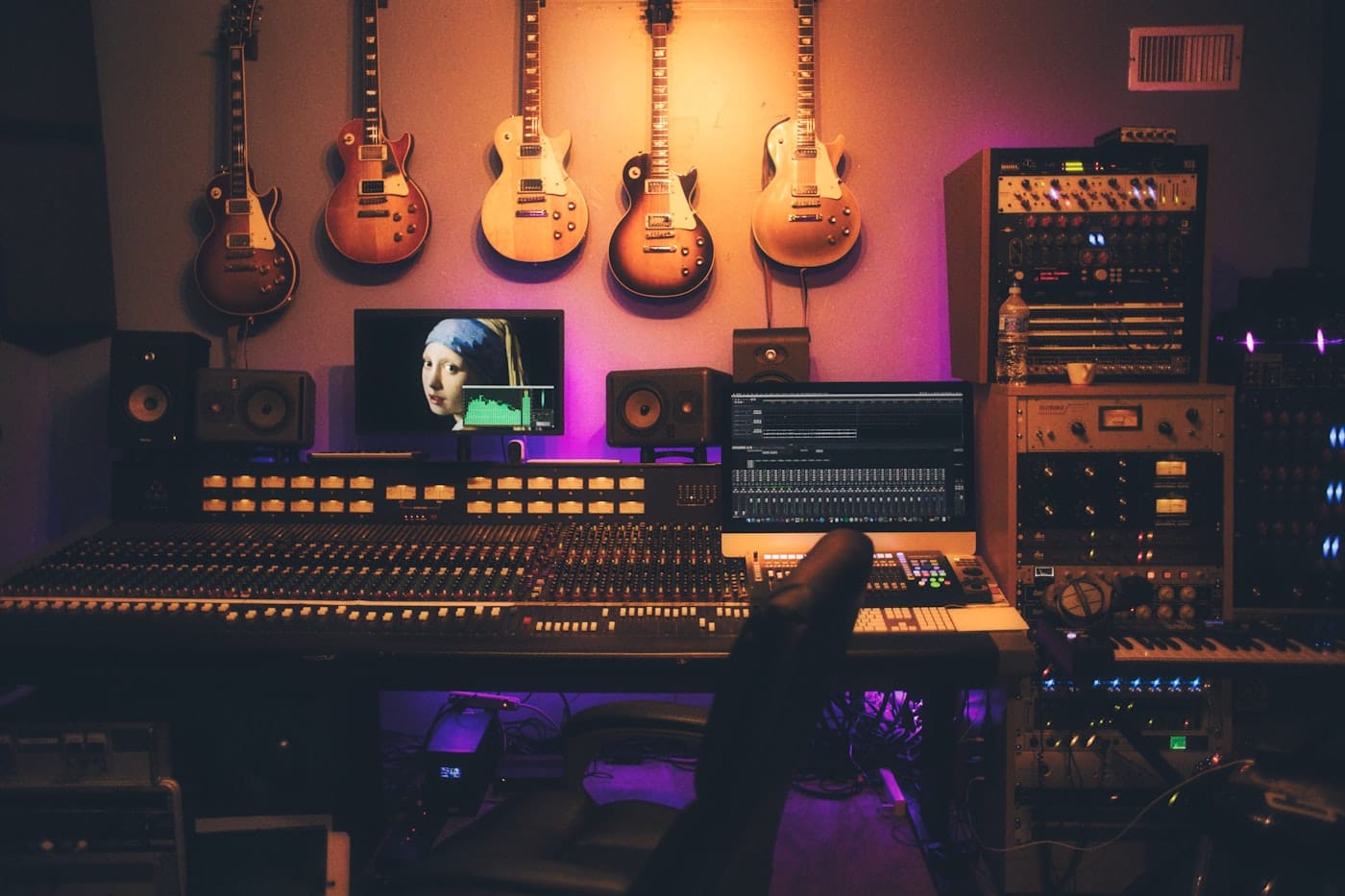
That is where a mastering engineer earns their fee: translation, objectivity, and finish. At G Studio on Palm Jumeirah I master through a Neumann-and-Tube-Tech signal path in a room built for critical listening — and, unusually for a multi-platinum studio, I am happy to walk newcomers through exactly what I’m doing so you learn while your song gets finished. If you have mixed it as far as you can and want it to compete, that final step is worth doing right.
Frequently asked questions
Can I master a song for free?
Yes. Every major DAW ships with the EQ, compressor and limiter you need. Free mastering is perfect for learning and for demos. For a competitive release, the limitation is usually your room and your ears rather than the plugins.
What LUFS should I master to in 2026?
Around -14 LUFS integrated is the safe streaming standard, with true peak at -1 dBTP. Push to -9 or -10 LUFS only for loud genres like pop, rap and EDM — and never at the expense of punch and clarity.
Is mastering the same as mixing?
No. Mixing balances the individual tracks into a stereo file; mastering treats that finished stereo file as a whole and prepares it for release. Mastering cannot fix mix problems, so finish the mix first.
How long does it take to master a song?
A skilled engineer can master a single in 30–90 minutes. As a beginner, expect it to take longer — and expect the biggest gains to come from better monitoring and reference tracks, not from more plugins.
Do I need to master each song of an EP separately?
Each song is mastered individually, then checked as a set so loudness and tone are consistent across the release. This “album mastering” pass is what makes a body of work feel cohesive front to back.
Can I get a song mastered in Dubai?
Yes. G Studio on Palm Jumeirah offers professional mixing and mastering, typically around AED 400–1,000 per track, or as part of a full production package. You can send a finished mix or record the whole song in-house.
About the author. George Yukhanov is a multi-platinum, award-winning songwriter, composer and producer with over 20 years in music, ranking in the top 5% of producers worldwide. He runs G Studio on Palm Jumeirah, Dubai — home to a Neumann U87 and Tube-Tech MP2A — and is the rare multi-platinum producer who works openly with newcomers, developing artists and voices from first session to finished master.